


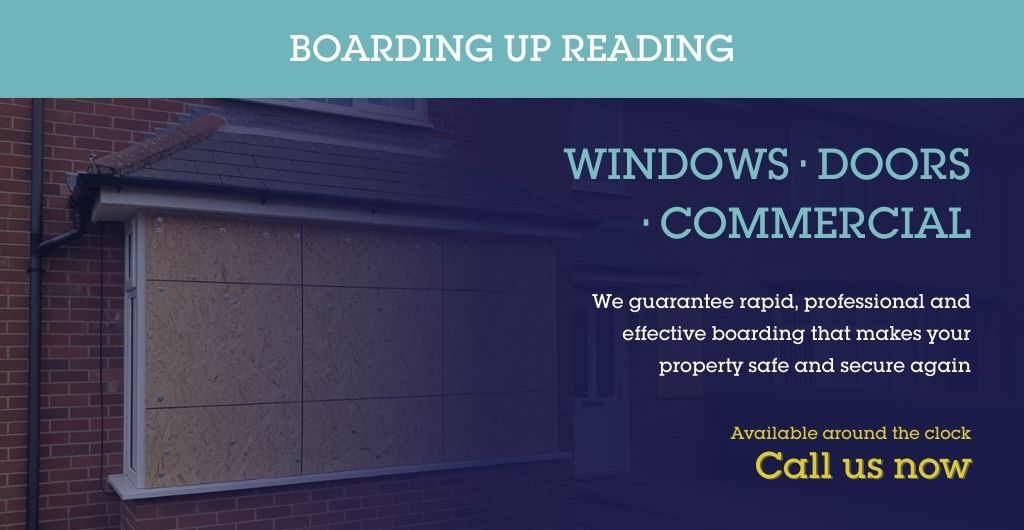
Storm damage boarding up in Reading (RG1–RG45): what to do next
Storm damage is stressful because it’s rarely just one problem. A slipped roof tile becomes a soaked loft, a smashed pane becomes a security risk, and a broken door or gate can leave the whole property exposed.
If you need storm damage boarding in Reading and across the RG postcodes, we’ll help you secure the building quickly and safely so you can take the next steps (insurer, roofer, glazier) without worrying about the property being open to the weather or opportunistic entry.
For urgent help, use our emergency line: Call 01182 308 876 or email us.
When storm damage usually happens in Reading and the RG area
The Reading area sits in the Thames Valley and while we don’t get coastal conditions, strong gusts and driving rain can still cause real damage—especially where properties are exposed on higher ground or open edges.
We’re commonly called out after:
- Gusts along open stretches near the M4 corridor and big road junctions (M4 J10 for Winnersh/Wokingham and J11 for Shinfield/Spencers Wood), where wind can funnel around newer developments and commercial parks.
- Heavy rain and debris near the River Thames and River Kennet (including central Reading around the Oracle/Waterside areas), where water ingress becomes urgent once glass is broken or roof coverings shift.
- Fallen branches from mature trees in places like Prospect Park, along the Thames Path, or older residential streets with established gardens (common in Caversham, Tilehurst, Earley and Woodley).
Typical storm-related damage includes:
- Broken windows and blown-in glazing (especially large panes, bay windows, and older frames)
- Damaged doors (split timber, twisted uPVC frames, failed locks)
- Shopfront glazing impacts from flying debris or signage failures
- Roof openings from slipped tiles, missing felt, or broken skylights
- Temporary loss of security after fencing panels or gates fail (useful on voids or sites)
If you’re dealing with immediate exposure, you may need emergency boarding up rather than a planned visit.
First steps: what to do right now (before we arrive)
If it’s safe:
- Keep people away from broken glass and unstable doors/frames.
- Take a few photos from a safe distance (helpful for your insurer and for us to bring the right materials).
- Don’t climb onto the roof or ladders in high winds or heavy rain.
- If a window or door is hanging loose, avoid forcing it—frames can shift and crack further.
- Call your insurer early if you can. Most policies expect “reasonable steps” to prevent further damage.
If you’ve had a burglary after storm damage (it happens), you may also want our guidance on securing property after burglary.
How we secure storm-damaged properties (what happens on site)
Storm damage work is a mix of weatherproofing and security. Our aim is to make the building safe, reduce further water ingress, and prevent unauthorised entry—without doing unnecessary extra damage.
1) We assess the opening and the condition of the frame
We’ll look at:
- Whether the frame is sound enough to take fixings
- Whether there’s remaining glass that needs making safe
- Access constraints (rear gardens, alleyways, flats with communal entrances, shopfronts in busy areas)
If the frame is too damaged for a clean, non-destructive fix, we’ll explain the options before proceeding.
2) We choose the right boarding method (plywood vs OSB, fixings, and layout)
Common materials we use include:
- 18mm exterior-grade plywood for most storm-damaged windows/doors where strength matters
- 12mm OSB for smaller openings or lower-risk areas, where appropriate
We size boards properly (not “one sheet fits all”) and fix them with anti-tamper fixings where the property may be unattended. Anti-tamper methods matter after storms because a lot of buildings are left temporarily vacant while owners wait for repairs.
If it’s a glazed commercial frontage or an obvious target location, we’ll often recommend shopfront boarding in Reading rather than a light-duty approach.
3) We secure doors and vulnerable access points
Storms often damage doors by slamming them against frames or breaking locks. Depending on what we find, we can:
- Board a door opening safely using robust sheets and secure fixings
- Recommend a stronger, medium-term option like a temporary steel door where repeated access is needed (e.g., trades coming and going, insurance visits, or a void property)
If the door is the main security issue, see door boarding in Reading.
4) We make roof and skylight openings safe (where boarding is appropriate)
Missing tiles and torn felt aren’t always “boardable” in a meaningful way from ground level, but roof openings and broken skylights often are—especially on flat roofs, extensions, and accessible sections.
Our priority is safety. We won’t take risks in dangerous conditions. Where access is safe, roof boarding can provide temporary protection to limit water ingress until a roofer completes permanent repairs.
5) We document the work for your records/insurer
After the property is secure, we can provide:
- Time-stamped photos of the secured areas
- A clear work statement describing what was done and why
- An itemised invoice (useful for insurance claims)
We’re not loss adjusters and can’t tell you what your policy will pay, but our documentation is designed to support the kind of evidence insurers usually request. See more practical guidance on insurance claims support.
What storm damage boarding up can (and can’t) do
Being upfront helps you plan.
What it can do
- Secure broken openings against entry and further damage
- Provide a temporary barrier while you arrange glazing/roofing repairs
- Reduce risk of additional water ingress through the exposed opening
- Help landlords and managing agents protect an empty or vulnerable unit
What it can’t do
- It’s not a substitute for proper roof repairs where the structure has failed
- It won’t stop all water in extreme weather (especially wind-driven rain), but it materially reduces exposure
- We don’t provide full restoration services (e.g., drying, plastering, smoke/odour remediation after related incidents). Our job is to secure the property.
Common storm-damage scenarios we handle in Reading
Reading’s housing mix means we see a wide variety of call-outs:
- Victorian and Edwardian terraces around Katesgrove, Newtown and West Reading: older sash windows and timber frames can be vulnerable when wind-driven rain finds weak points.
- 1930s semis in Tilehurst, Caversham, Earley and Woodley: bay windows and larger front elevations can take the brunt of flying debris.
- Flats and modern developments near Reading station and the town centre: communal access and upper-floor glazing needs careful planning for safe access.
- Retail and commercial units around Broad Street, Oxford Road, and the A33 corridor: large panes and shopfronts often need heavier-duty boarding and anti-tamper fixings.
If your damage is mainly broken glazing, window boarding in Reading is usually the quickest, most direct solution.
How to book storm damage boarding up (what we’ll ask)
When you call 01182 308 876, it helps if you can tell us:
- The postcode (RG1–RG45) and nearest main road/landmark
- What’s damaged: window, door, shopfront, roof/skylight
- Whether the building is occupied or currently vacant
- Any access details (rear lane, gated entry, flat number, site contact)
- If the police, fire service, or building management have been involved
We don’t promise fixed arrival times—conditions and call volumes vary during storms—but we prioritise genuinely urgent exposures and will be clear about what’s possible.
FAQs: storm damage boarding in Reading
How long does storm damage boarding up take?
It depends on the number of openings and access. A single window can often be secured quickly once we’re on site; multiple windows, shopfronts, or roof openings take longer. We’ll talk you through what we expect before starting.
Is storm damage boarding up covered by insurance in Reading?
Many policies include cover for “making safe” or emergency measures after storm damage, but coverage varies. Keep your photos, any incident references, and our invoice/work statement. Our insurance claims support page explains what insurers commonly ask for.
Can you board up a shopfront after storm damage?
Yes—storm debris can crack or shatter commercial glazing. Shopfront work usually needs larger boards, stronger fixings, and careful consideration of public safety. See shopfront boarding in Reading.
Do you cover villages and towns outside Reading?
Yes. We cover Reading and the wider RG postcode area (RG1–RG45), including places like Wokingham, Bracknell, Newbury, Thatcham, Pangbourne, Sonning, Twyford and more. For an overview, visit areas we cover.
Can you secure a property if the door frame is badly damaged?
Often yes, but the method may change. If the frame won’t safely take fixings, we’ll explain the options—boarding method, additional bracing, or a stronger temporary solution. If a more robust access solution is required, we may recommend door boarding in Reading.
Next steps: secure the property, then plan the repair
Storm damage rarely ends with one trade. A good sequence is:
- Make safe / board up exposed openings
- Notify insurer and share photos/documentation
- Arrange glazier/roofer for permanent repairs
- Remove boarding once the site is secure and reinstated
If you’re comparing options or want to understand the basics, what is boarding up? explains how temporary security works and when to use different approaches.
Need storm damage boarding up in Reading?
If wind or debris has damaged a window, door, shopfront, or roof opening, we’ll help you secure it so you can move forward safely.
Need help now? Call 01182 308 876 for immediate assistance.
Or send details and photos to info@boarding-up-reading.co.uk.
