


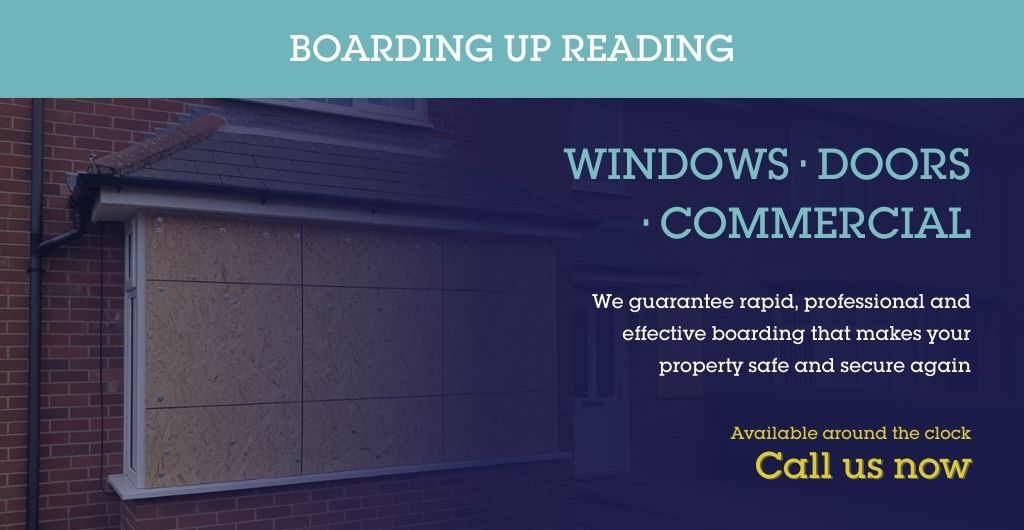
Vacant Property Boarding Up in Reading (RG1–RG45)
Vacant property boarding up in Reading is about one thing: keeping an empty building secure and weather-tight until it’s ready to be used again. Whether it’s a void between tenancies in RG1, a probate property in Caversham, or a closed commercial unit on a parade, an unoccupied building is more likely to attract unwanted attention—and small issues (like a cracked pane) can quickly turn into costly damage.
Boarding Up Reading secures vacant and void properties across Reading and the wider RG postcode area (RG1–RG45). We use practical, insurance-friendly methods and we’ll explain the options before we fix anything—especially if frames or surrounding masonry are already compromised.
If you need urgent help (for example after a break-in), use our emergency boarding up service.
When a property becomes “vacant” (and why it needs securing)
“Vacant” doesn’t always mean abandoned. In Reading and the surrounding towns and villages, we commonly secure:
- Rental voids between tenants (often needing quick turnaround and minimal disruption)
- Probate / inherited homes where access is infrequent
- Homes awaiting sale (especially where scaffolding is up or windows have been removed)
- Commercial units between occupiers (shopfront glazing is a common weak point)
- Properties undergoing refurbishment (openings exposed while works are paused)
- Former HMOs or multi-let buildings where not all parts are occupied
- Sites with repeated ASB (vandalism, attempted entry, theft of metals/materials)
Vacant properties in particular tend to suffer from “silent” problems—water ingress through a broken fanlight, a side door that no longer latches properly, or a rear window left on vent. Those are exactly the kinds of openings opportunists look for.
Typical vacant-property scenarios we handle in Reading and the RG area
1) Break-ins and repeated attempted entry
Empty houses and units can be targeted repeatedly once someone realises no one is around. We’re often called after a first incident to prevent a second.
If you’re dealing with forced entry, see burglary repairs and boarding for what to do next and what insurers usually ask for.
2) Storm damage and water ingress
Reading gets its share of high winds and driving rain, and exposed locations (or properties with older roofs and glazing) can take a hit. A slipped tile, broken skylight, or damaged soffit can let water in fast—especially if no one’s checking the property daily.
More on urgent securing after severe weather is on our storm damage boarding page.
3) Fire-damaged or smoke-affected openings
After a fire, doors and windows may be compromised, or glazing may be removed by the fire service for ventilation. Our role is to secure the building; we don’t do smoke or odour remediation, but we can get the property locked up and protected from weather and trespass.
See fire damage property securing for the practical steps.
4) Renovation projects paused mid-way
In places like Reading, Earley, Tilehurst and Caversham, we regularly see refurbishment projects where windows/doors have been removed, or where a site is left with temporary sheeting that doesn’t last. Proper boarding helps keep tools, materials and interiors protected if contractors aren’t on-site every day.
5) Vacant commercial units and shopfront vulnerability
Empty retail units—particularly with large glazed frontages—are vulnerable. Even a minor impact crack can quickly spread, and a loose pane is an easy entry point.
Our shopfront boarding service covers larger openings and commercial considerations.
How we secure vacant properties (and how we choose the right method)
There isn’t a single “best” way to board up a vacant building. The right approach depends on how long the property will be empty, the risk level, the condition of frames, and whether you need access for surveys, viewings, or ongoing works.
Non-destructive window and door boarding (where possible)
Where frames are still sound, we’ll aim for secure fixing methods that avoid unnecessary damage. This is often the preferred option for rental voids and properties being prepared for sale.
For most openings we use:
- 18mm exterior-grade plywood for robust security and better resistance to weather
- 12mm OSB for smaller or lower-risk openings where appropriate
If the surrounding frame is too rotten or the brickwork is crumbling, we’ll talk you through options before proceeding, because “standard” fixings may not hold safely.
Related service: window boarding in Reading and door boarding up.
Anti-tamper fixings for unattended buildings
Vacant properties are often unattended for days at a time. We commonly use anti-tamper fixings (and appropriate fixing patterns) so boards can’t simply be removed from the outside with basic tools.
This matters most when:
- The building backs onto alleyways or rear access paths
- It’s a corner plot with multiple exposed elevations
- The incident has already attracted attention (repeat risk)
Temporary steel doors for medium-term security
If a door has been forced and you need reliable re-entry for contractors, letting agents or insurers, a temporary steel door is often more practical than timber boarding. It provides strong protection while allowing controlled access.
Related service: temporary steel doors and door boarding.
Security screens for longer void periods (where appropriate)
For longer voids—especially in areas with repeat attempts—steel security screens can be a better fit than timber alone. They’re designed for extended use and are often chosen by landlords and facilities managers managing multiple properties.
If you’re not sure which option suits your timeframe, tell us how long the building is likely to be empty and how often someone needs access.
Rooflights, skylights and other “forgotten” entry points
Vacant properties aren’t only entered through front doors. We often find vulnerable points such as:
- Flat-roof rooflights
- Skylights above stairwells or landings
- Basement/side return windows
- Rear patio doors with damaged glazing
- Fanlights above doors in older terraces
These openings can be overlooked during a quick lock-up, particularly after builders have been on-site.
Related service: roof boarding and skylight boarding.
What to expect when you book vacant property boarding up
1) A few questions on the phone
We’ll ask practical questions to get the right kit to you first time, such as:
- Is it residential or commercial?
- Which openings are damaged or vulnerable?
- Are there any access issues (gated rear, shared entrance, scaffolding)?
- Is the property currently safe to approach?
- Do you need ongoing access after we secure it?
If the job is urgent, start with emergency boarding up and we’ll prioritise what’s needed to make the building safe.
2) On-site assessment and clear options
We’ll inspect the frames and surrounding structure. If there’s hidden damage (rotted sills, loose bricks, bent door frame), we’ll explain what can and can’t be secured safely and what the alternatives are.
3) Boarding installation and basic weather protection
We fit the boards/screens/temporary door, aiming to:
- Restore a secure perimeter
- Reduce the chance of water ingress
- Prevent easy removal from the outside
No two buildings are identical; a Victorian terrace in West Reading can present different fixing challenges to a newer estate property in Lower Earley.
4) Documentation you can pass on
For landlords, managing agents and insurers, paperwork matters. We can provide:
- Time-stamped photos of damage before/after (where possible)
- An itemised invoice
- A short work statement describing what was secured and how
We’re not loss adjusters or legal advisers, but we can help with the kind of documentation insurers typically ask for—see insurance claims support.
Vacant property security in Reading: local realities we plan for
Reading has a mix of dense terraces, riverside flats, student lets, business parks and busy retail areas—each with different risk points.
We regularly work around:
- Town-centre access constraints near Reading Station and the one-way systems
- Rear access routes behind terraces (common in RG1/RG2/RG30)
- Mixed-use streets where residential sits above commercial units
- Riverside conditions near the Thames and Kennet where damp and wind-driven rain can be a factor
If you manage properties across the region, we also cover the wider RG area including places like:
For the full list, see areas we cover.
Vacant properties: practical steps you can take before we arrive
Only do what’s safe—if there’s an intruder, damage to overhead glass, or any risk of collapse, keep clear and call the relevant emergency services.
If it’s safe to do so, helpful actions include:
- Take photos of damage for your insurer/landlord file
- Note any police incident number (if applicable)
- Secure valuables and documents if you can access safely
- Turn off water if there’s a leak risk (especially after break-ins)
- Tell us about alarms, entry codes, or keys to avoid delays
If you’re unsure, call and we’ll talk it through.
Related services for voids and unoccupied buildings
Vacant properties often need a mix of solutions depending on what’s been damaged:
- Broken glazing: window boarding in Reading
- Forced doors and insecure entrances: door boarding
- Large commercial glazing: shopfront boarding
- Rooflights and skylights: roof boarding
- Post-incident help and guidance: situations we handle
- Background and basics: what boarding up means in practice
FAQs: vacant property boarding up (Reading & RG)
How quickly can you secure a vacant property in Reading?
We prioritise urgent calls, especially after break-ins or storm damage, but we don’t quote fixed arrival times—traffic, access, and the type of work required can all affect scheduling. If you need immediate help, start with emergency boarding up and we’ll advise the next steps.
Is boarding up covered by insurance for empty homes?
Often, securing a property after damage is viewed as a reasonable step to prevent further loss, but policies vary—especially for unoccupied properties where specific conditions may apply. We can provide photos and an itemised invoice to support your claim. See insurance claims support for guidance.
Will boarding stop damp and water ingress completely?
Boarding helps reduce exposure and can offer basic weather protection, but it’s not a substitute for repairs to roofs, brickwork, or defective gutters. If there’s an active leak, tell us—sometimes additional temporary measures are needed to limit water entry until repairs are arranged.
Can you keep access for viewings, surveys, or contractors?
Yes. If you need controlled access, a solution like a temporary steel door is often better than fully boarding a doorway. We’ll talk through how often access is needed and recommend the most practical setup.
Do you cover void properties outside Reading (RG postcodes)?
Yes—our coverage includes Reading and the wider RG area (RG1–RG45). If you’re managing a portfolio across multiple towns, we can secure sites in places like Wokingham, Bracknell and Newbury as well as Reading itself.
Ready to secure a vacant property?
If your property is empty and vulnerable—whether it’s a planned void or the result of damage—we’ll help you secure it properly and document the work clearly.
Ready to get started? Call 01182 308 876 or email us for a free, no-obligation quote.
