


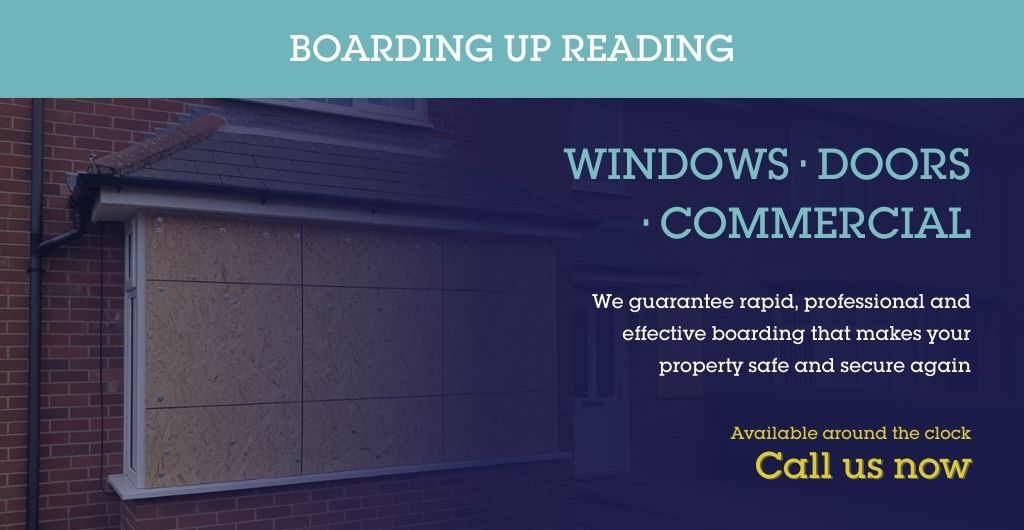
Pricing for Boarding Up in Reading (RG1–RG45)
If you’re searching for pricing for boarding up in Reading, it’s usually because something’s gone wrong—broken glass, a forced door, storm damage, or a building left insecure. We’ll keep this straightforward: boarding-up costs depend on the opening, the condition of the frame, the access, and the level of security you need.
We cover Reading and the wider RG postcode area (RG1–RG45), from central Reading and Caversham through to Wokingham, Bracknell, Newbury and beyond. For urgent help, see our emergency boarding up page.
For a clear quote: Call 01182 308 876 or email us. We’ll ask a few practical questions and—where helpful—review photos on WhatsApp or email.
What affects the price of boarding up?
There isn’t one “standard” price because properties and damage vary hugely across Reading—from Victorian terraces around Cemetery Junction and St Mary’s Butts to modern flats near Reading Station and commercial units around Broad Street and the Oracle area. Here are the main factors that change the cost.
1) Size and number of openings
- A small bathroom window is different to a full bay window or a wide shopfront panel.
- Multiple windows/doors on the same visit can change the overall cost.
If you know rough dimensions (width and height), that’s often enough for an initial estimate.
2) Material choice (plywood vs OSB vs steel solutions)
We choose materials based on the situation and risk:
- 18mm exterior-grade plywood is common for robust, short-to-medium term security on larger openings.
- OSB (often 12mm) can be suitable for smaller/low-risk openings and temporary protection.
- Temporary steel doors cost more than timber boarding, but they’re often the right option when a door has been forced or the property will be vacant.
- Steel security screens (Sitex-style) are typically for longer-term void security and repeat-risk locations.
You can read more about the options on what is boarding up and our boarding up services in Reading overview.
3) Type of opening (window, door, shopfront, roof)
Different openings require different fixing methods and access:
- Windows: usually boarded over the glazing/frame with anti-tamper fixings. See window boarding in Reading.
- Doors: may need internal bracing, frame stabilisation, or a steel door if the lock area is destroyed. See door boarding in Reading.
- Shopfronts: larger sheets, higher footfall, and a need to keep signage and entrances safe. See shopfront boarding in Reading.
- Roofs/skylights: access equipment and weatherproofing are often the cost drivers. See roof boarding in Reading.
4) Condition of the frame and surrounding structure
If the frame is split, the brickwork is loose, or the door edge is shattered, it can limit “non-destructive” fixing options.
We’ll always explain what we can do safely and why. If the frame is too damaged to take fixings properly, we’ll discuss alternatives (such as a temporary steel door) before proceeding.
5) Access, height and site constraints
Pricing can change if:
- Boarding is needed above ground floor (ladders/scaffold tower access).
- There’s limited parking/loading (common near central Reading one-way systems).
- The area is tight—rear access via alleyways, courtyards, or shared passages.
6) Urgency and timing (out of hours vs planned works)
Urgent call-outs, late-night attendance, or work in difficult conditions can affect the cost. We don’t quote guaranteed arrival times, but we do prioritise properties that are exposed, unsafe, or at high risk.
If you’re dealing with a break-in right now, go straight to 24-hour emergency boarding up in Reading.
7) Security level required
A ground-floor window on a busy road needs different protection to a rear window in a quiet cul-de-sac, and a vacant commercial unit often needs higher security again.
Tell us if the building will be:
- Occupied (you need it secure but usable)
- Unoccupied (risk of repeat entry)
- Vacant/void (longer-term securing may be best)
For vacant buildings, see vacant property boarding.
Typical work types we price for (and what’s usually included)
Rather than listing fixed prices (which can mislead), here’s what a quote normally covers.
Emergency window boarding (domestic and commercial)
Usually includes:
- Measuring and cutting boards on site
- Fixing with appropriate fasteners (including anti-tamper where needed)
- Making safe loose glass (where safe to do so)
- Basic weather protection to reduce drafts/rain ingress
Related guidance: storm damage boarding and vandalism repair boarding.
Door boarding and temporary steel doors
Depending on damage, we may:
- Board over/brace a damaged door opening
- Stabilise the frame enough to take fixings
- Fit a temporary steel door when timber boarding won’t provide reliable security for an entrance
If the damage is from a break-in, see burglary repairs and boarding.
Shopfront boarding and retail security
For shopfront glazing, pricing is influenced by:
- Width/height of the panes
- Whether the unit is in a high-footfall area
- Keeping a safe route for staff/contractors where possible
If a vehicle or impact caused the damage, see accident damage boarding.
Roof and skylight boarding (temporary weatherproofing)
Roof and skylight work is often priced around:
- Safe access requirements
- The size and pitch of the opening
- Temporary sealing/weatherproofing needs
After a fire, note that we secure the property but we don’t provide smoke/odour remediation—see fire damage boarding.
How we quote: quick, clear, and no pressure
To give you an accurate price, we typically ask:
- What’s been damaged? (window/door/shopfront/roof)
- Where is it? (area/postcode—RG1 to RG45)
- How big is the opening? (rough dimensions if possible)
- Is the property occupied tonight?
- Is the frame intact or split/crumbling?
- Can you send photos? (only if safe)
If you can safely take photos before we arrive, do—especially close-ups of the frame and a wider shot showing the whole opening. It helps us bring the right sheet sizes and fixings.
What you receive for your money
We aim to leave you with a property that’s secure, safer, and less exposed to weather. On completion, you can expect:
- A clear description of what we fitted and where
- Time-stamped photos of the secured openings (useful for landlords, agents, and insurers)
- An itemised invoice and a short work statement on request
- Practical advice on next steps (glazier, locksmith, insurer, managing agent)
For claim-related documentation, see insurance claims support.
Is boarding up covered by insurance?
Often, yes—boarding up is commonly treated as an emergency mitigation measure after events like burglary, vandalism, storm or impact damage. Coverage depends on your policy, excess, and circumstances.
A few honest pointers:
- Keep any police reference number (for break-ins/vandalism).
- Take photos of the damage before boarding if it’s safe.
- Notify your insurer early; they may ask for invoices and evidence of mitigation.
We’re not loss adjusters or legal advisers, but we’re used to providing the paperwork insurers typically request. See insurance claims for guidance.
Can you reduce the cost without compromising security?
Sometimes, yes. Options might include:
- Boarding only the compromised openings first, then returning for planned works
- Using the right material for the risk (e.g., robust plywood where needed; avoiding over-specification)
- Choosing a temporary steel door only where a boarded entrance would be a weak point
- Planning work in daylight where access is complicated (roof openings, tight rear access)
We’ll talk you through pros/cons so you’re making an informed decision.
Pricing FAQs (Reading & RG)
How much does boarding up cost in Reading?
It depends on the opening size, material, access, and damage to the frame. The fastest way to get a clear answer is to send photos and the postcode. For an overview of how pricing works, you’re on the right page—if it’s urgent, use emergency boarding up.
Do you charge more for out-of-hours boarding up?
Work outside normal hours can cost more, particularly if the job is complex or requires additional safety measures. We’ll always tell you any cost implications before we proceed.
Can you give a price over the phone?
Often we can give a sensible estimate from a few details and photos. If the frame is badly damaged or access is difficult, we may need to attend to confirm the best method before finalising.
Is a temporary steel door more expensive than boarding a door?
Yes, usually. But if an entrance is heavily damaged or the property will be vacant, a temporary steel door can be better value because it provides stronger, more reliable security than timber over an actively used doorway. Learn more on door boarding in Reading and vacant property boarding.
Do landlords and agents get invoices suitable for records and claims?
Yes. We can provide itemised invoices and supporting photos for landlords, letting agents, and facilities teams across Reading and RG postcodes. If you’re managing a commercial site, see commercial boarding up.
Ready for a quote?
If the property is insecure, don’t wait—securing it quickly reduces the risk of weather damage and repeat entry.
Ready to get started? Call 01182 308 876 or email us for a free, no-obligation quote.
